
Liliana with Xiaoyin
We came to Hangzhou to visit Xiaoyin. We spent three days together, and enjoyed every moment, with someone who really knew what everything is about.
The city is renowned for is lake, which is surrounded by scenic hills, with temples, pavilions and gardens. It was a tourist attraction even 1500 years ago; two famous poets were governors of Hangchow, and each built a causeway across the lake. The city also was one of the capitals of China, and was visited by Marco Polo (about 1280) and Ibn Battuta (about 1350). In those times it was the most populous city in the world, and a great port of entrance to China. However, the harbor silted; eventually the major economic importance passed to Shanghai.
Near the city there are also some famous tea plantations on the hills. The season for the special green tea crop had just ended a week before.
| |
Liliana with Xiaoyin |
| The water jets in the background dance gracefully with music. |  |
 |
 |
 |
 |
 |
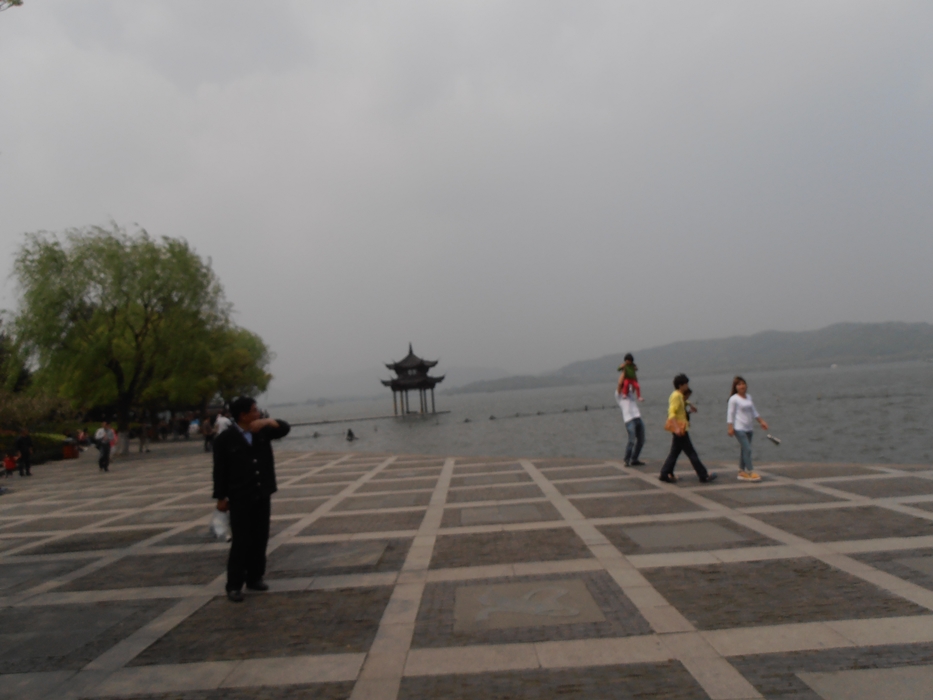
| The Western Lake is very popular, but not with western tourists. However, it will be soon discovered, as it is ranked among the ten most interesting sights in China, together with the Great Wall and the Xian Terracota Warriors. |  |
 |
 |
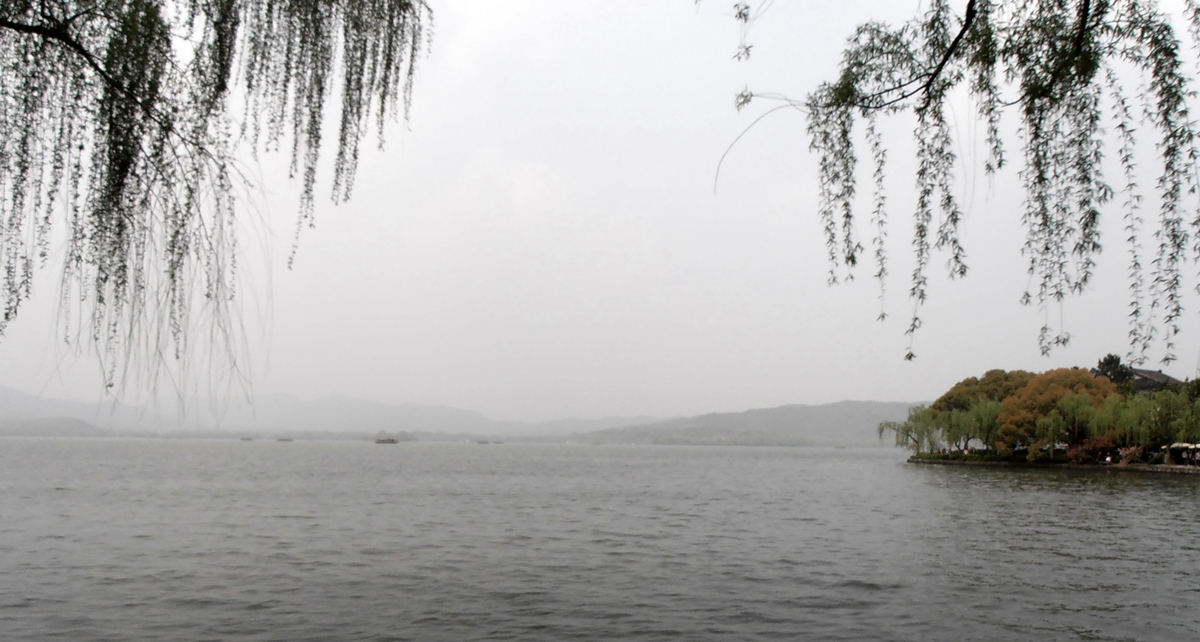 | Willowy dream |
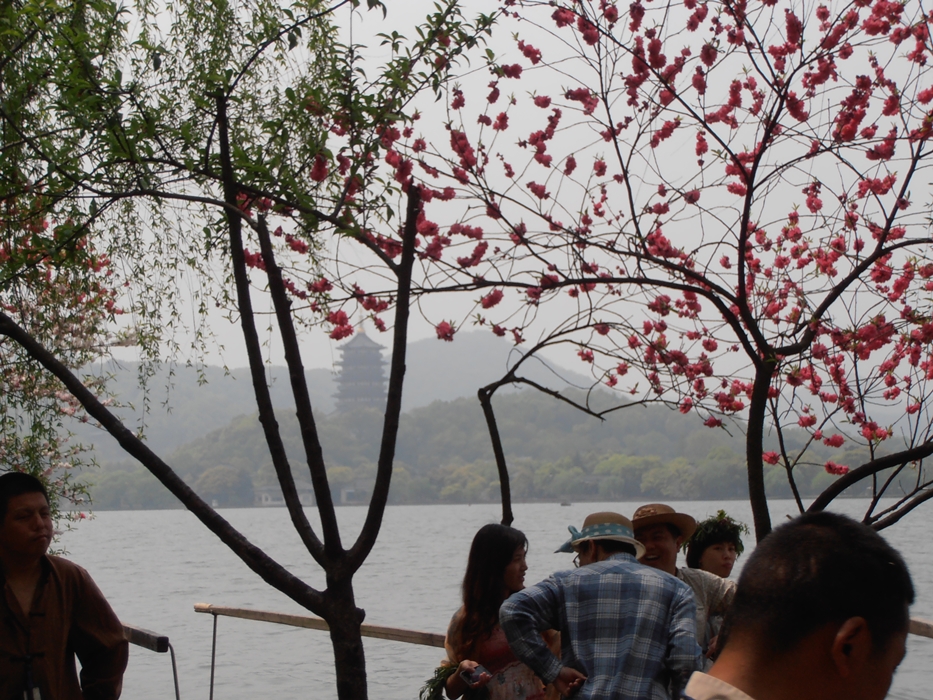
| Cherry blossoms |  |
 |
 |
 |
 |
 |

| 
|

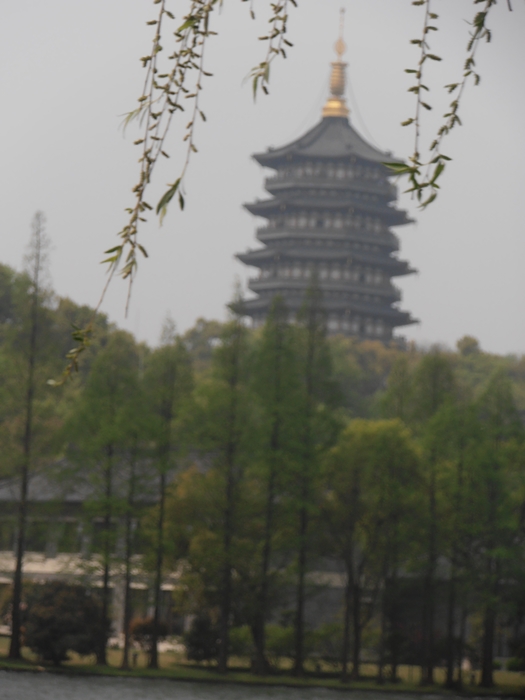
| 
|
| A big golden dragon boat – one of the many restaurants on the lake. | 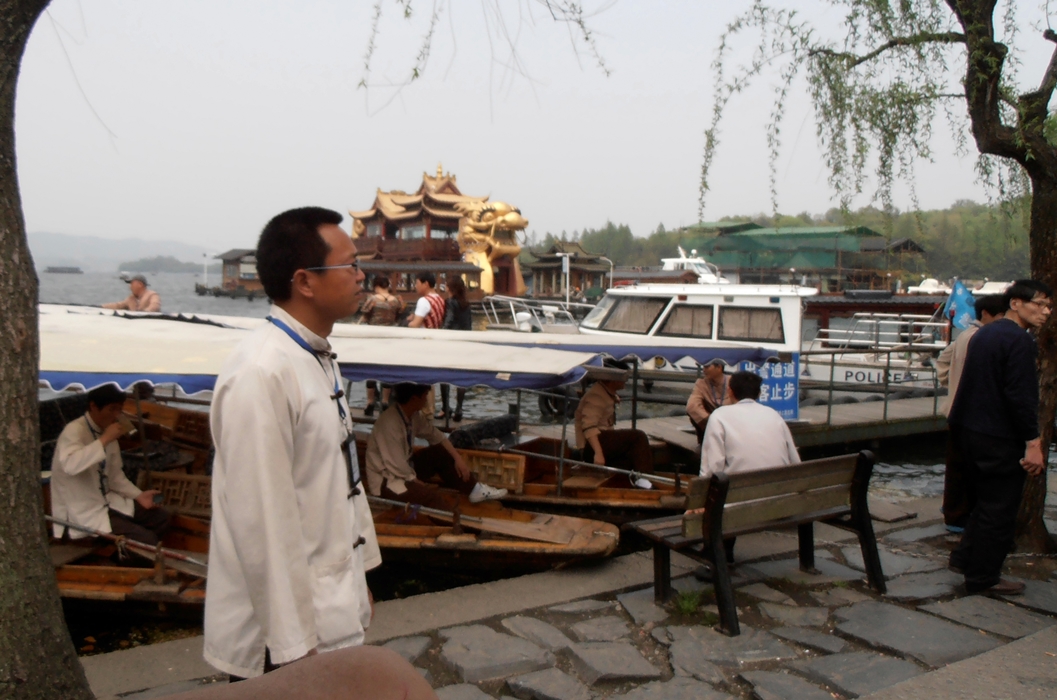 |
 | Trees in blossom. |
 |
 | Bamboo |
| On the causeway |  |
 |
 |
 | Pavilion on the shore. |
| Ornamental cherry blossom. |  |
 | The ornamental pond by the pagoda |
| Heaps of turtles |  |
 | Turtles and koi |
 |
 |
| The ornamental pond by the pagoda, with lions fence. |  |
 | 229 |
| 230 |  |
 | 231 |
| 232 |  |
 | 233 |

|  |
|
Archeological diggings under the current construction. Many ancient trasures were found, and some are on display above. Visitors drop coins for good luck. |  |
 |
The ancient wall bricks With time, the belief grew that these bricks are blessed, and people would dig them, grind them, and take them as medicine. |
| Roof with bells. |  |
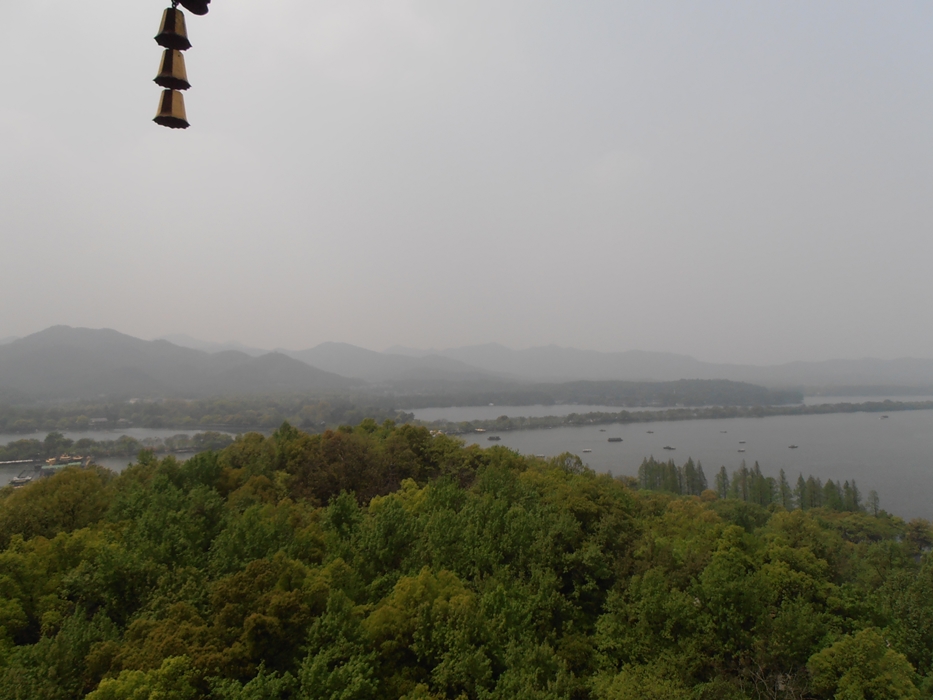 |
| View from Leifeng pagoda: the modern city on the other shore. |  |
 | View from Leifeng pagoda: another temple in the hills. |
| Pagoda bells, with the ancient causeway. |  |
 | Pagoda bells, with the distant city. |
 |
 | One of the islands in the lake. |
| This hall has a gilded roof, and is surrounded at eye level by reliefs of the "White Snake" legend. |  |
 |
| View from the pagoda – aquarelle | 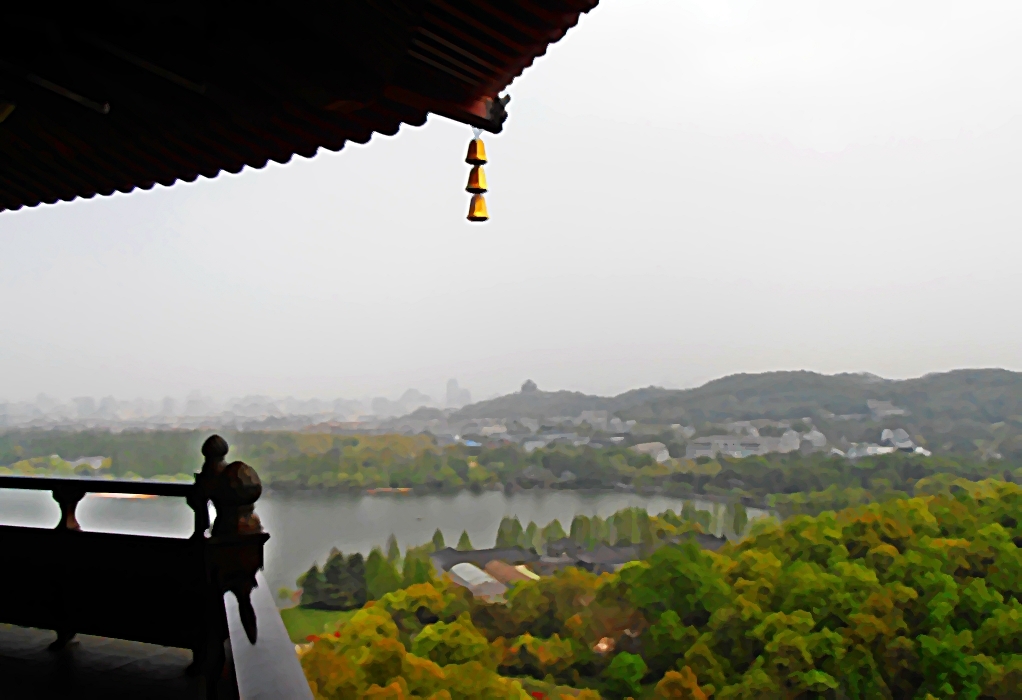 |
|
Crockery I find all these displays very attractive. |  |
 |
In the West we have the Horn of Plenty, in the Orient they have gourds. |
| Fans. |  |
 | Cut paper for decoration. |
| Just to show detais. |  |

| 
|
 |
 |

|  |
 |
 |
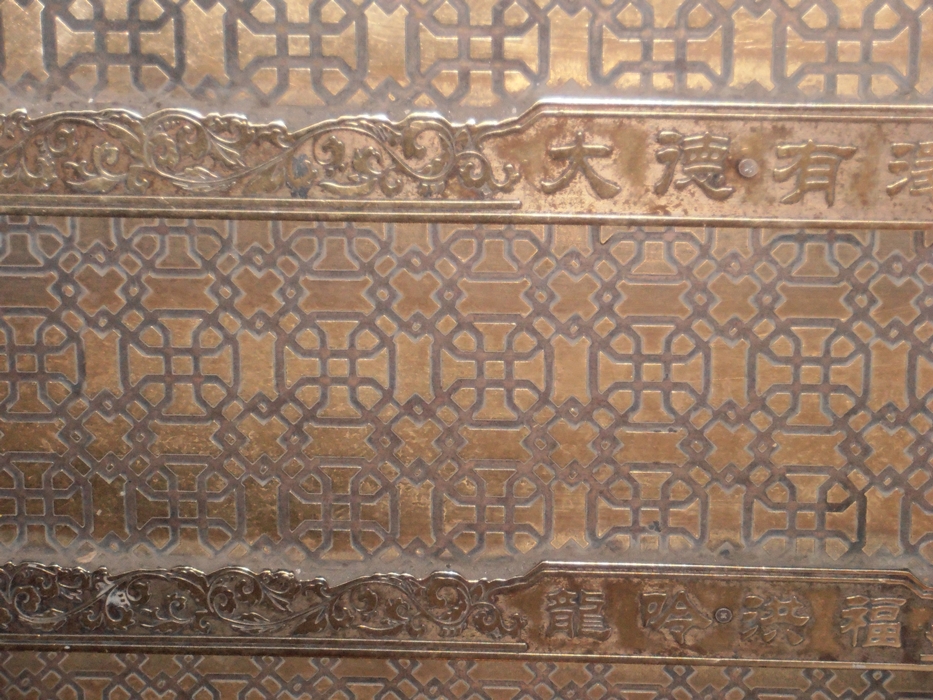 |
 | Table and syool in enamelled copper. |
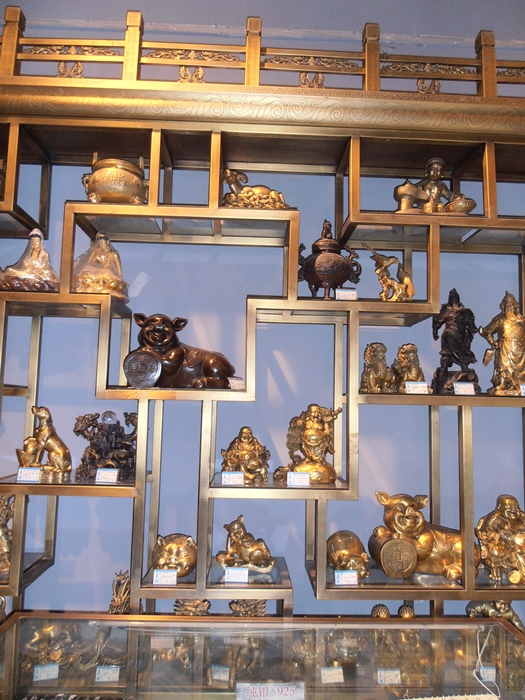 | 
|
 | I fully identify with this piggy. Not only is it fat and smiling, I also was born in the Year of the Pig. |
 |
 | Horned dragon |
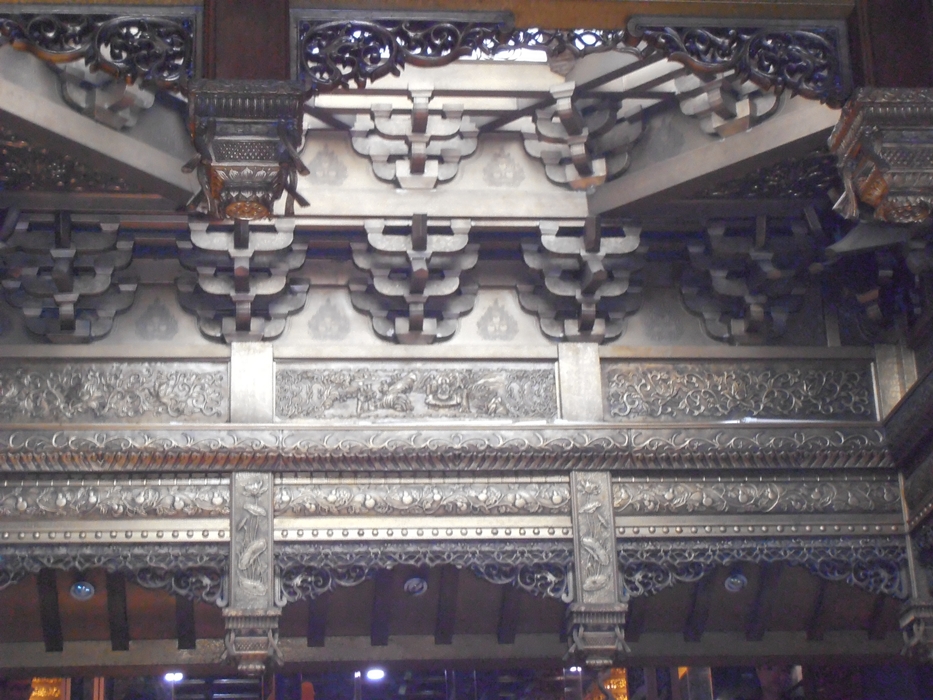 |
 |
Haveth childers everywhere We, at least, are safe, but there was a big crowd around the statue, with and without babies, touching the brass and taking pictures. Fertility is still a big plus in China, despite official policy. |
 |
 | Elegant dresses. |
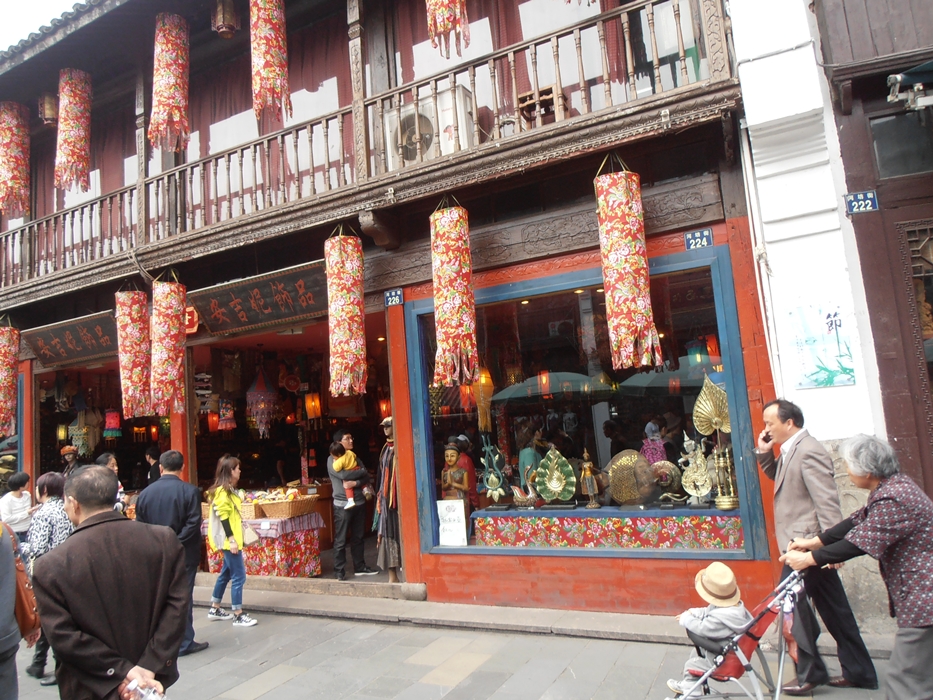 |
 | That would have been much better without the reflection; but then, I am reflective. |

| 
|
| An old pharmacy and traditional pharmacy museum | 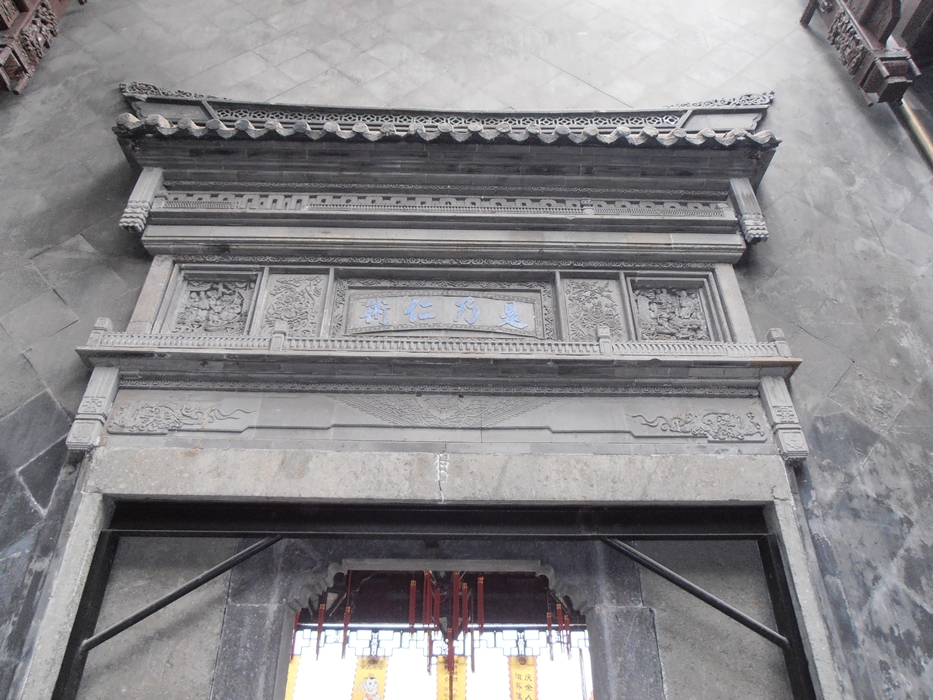 |
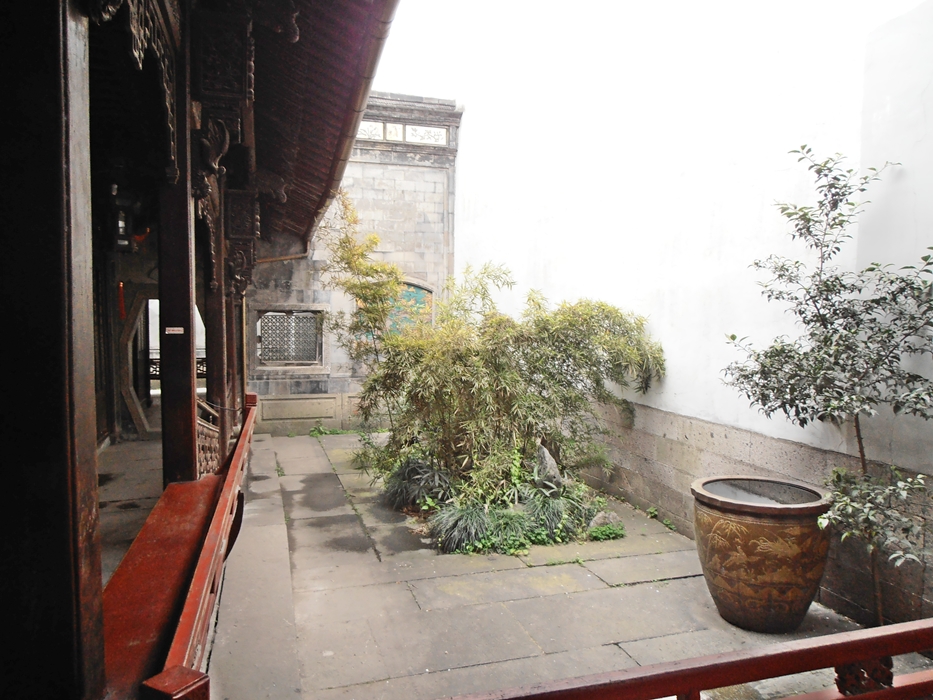 | Old pharmacy – inner court |
| Old pharmacy gate |  |
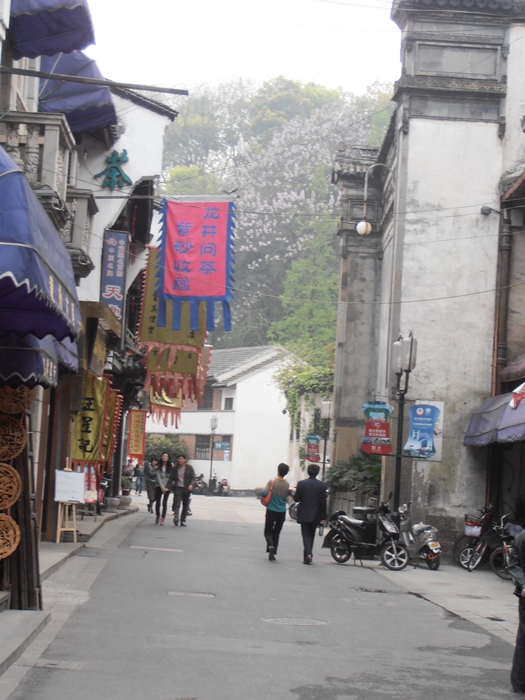
 | Restaurant – check the menu in the corner. |
Longjing 龍井 means Dragon Well; it sounds like Longines and is just as expensive. One pound of tea at about 3500 Yuan, which is a hefty 580 dollars!
BTW, the plantation is about one hour drive – in bad traffic, but that is a given; still, it was the first time Xiaoyin had visited it. We bought some good tea, but not there, of course. In the village, we just admired the scenery.
|
Picking tea It is a truly big deal; the best tea must be picked before the Qingming festival (the first week of April) and only two top leaves may be taken from any plant. Which, of course, involves a lot of jogging up and down those hills, to fill a basket. The work is done by hired farmhands, the inhabitants of Longjing are already much too rich. |  |
 |
 |
 | Gardens at Longjing |
 |
 |

| 
|
 |
 | Rolling tea leaves |
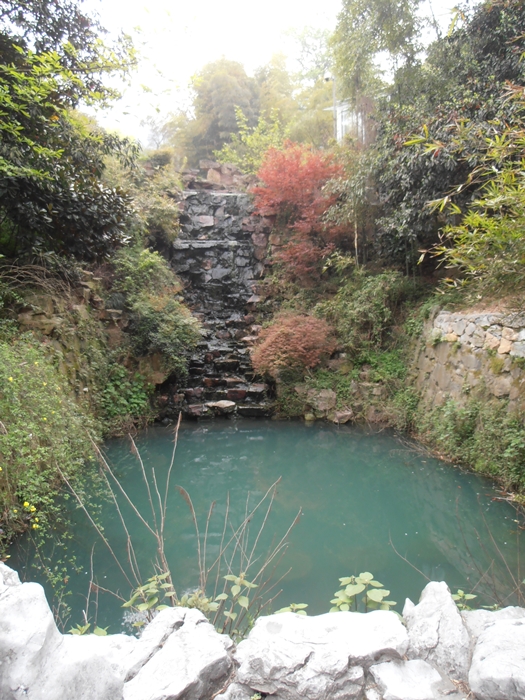
| The Dragon Fountain, from which the village takes its name. |  |

| 
|
 |
 |

| 
|
 |
| The strange fingerlike thingies are citrus fruit, called "Buddha's Hand". But it seems to be grown as bonsai – compare its size to the other flowers. I would have guessed that a citrus plant is at least a decent bush, taller than myself, but... In any case, it may be eaten, mostly candied. | 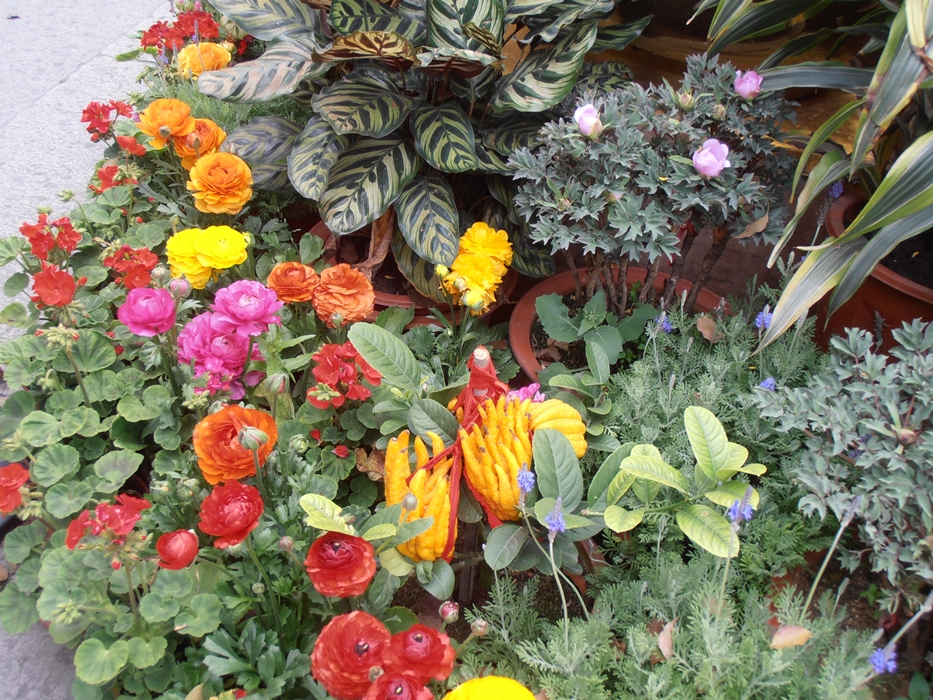 |
 |
 |
 |
| 
|
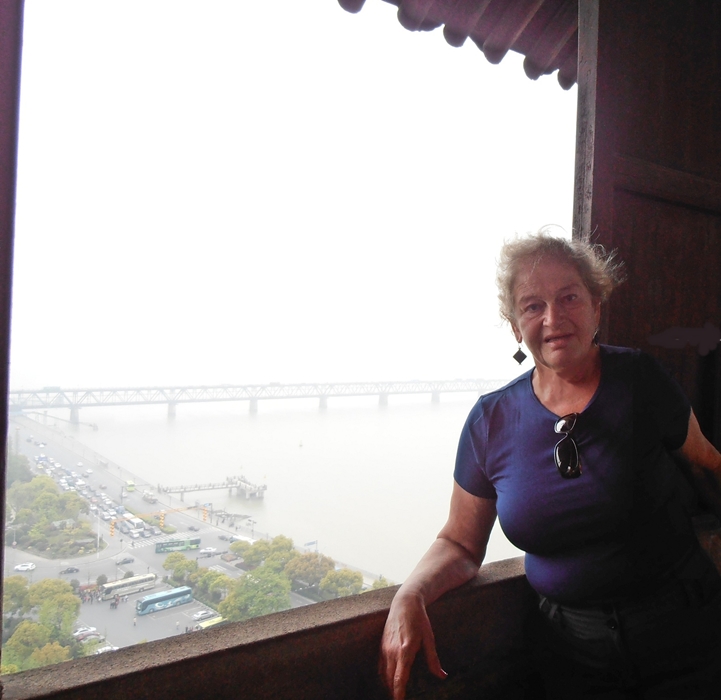
| The bridge seen from the Lihue pagoda. |  |
| Since "four" sounds like "death" in Chinese, all the numbers involving four are taboo. In deference to western customs, they also skip thirteen. So here are the room numbers left on our floor. |  |